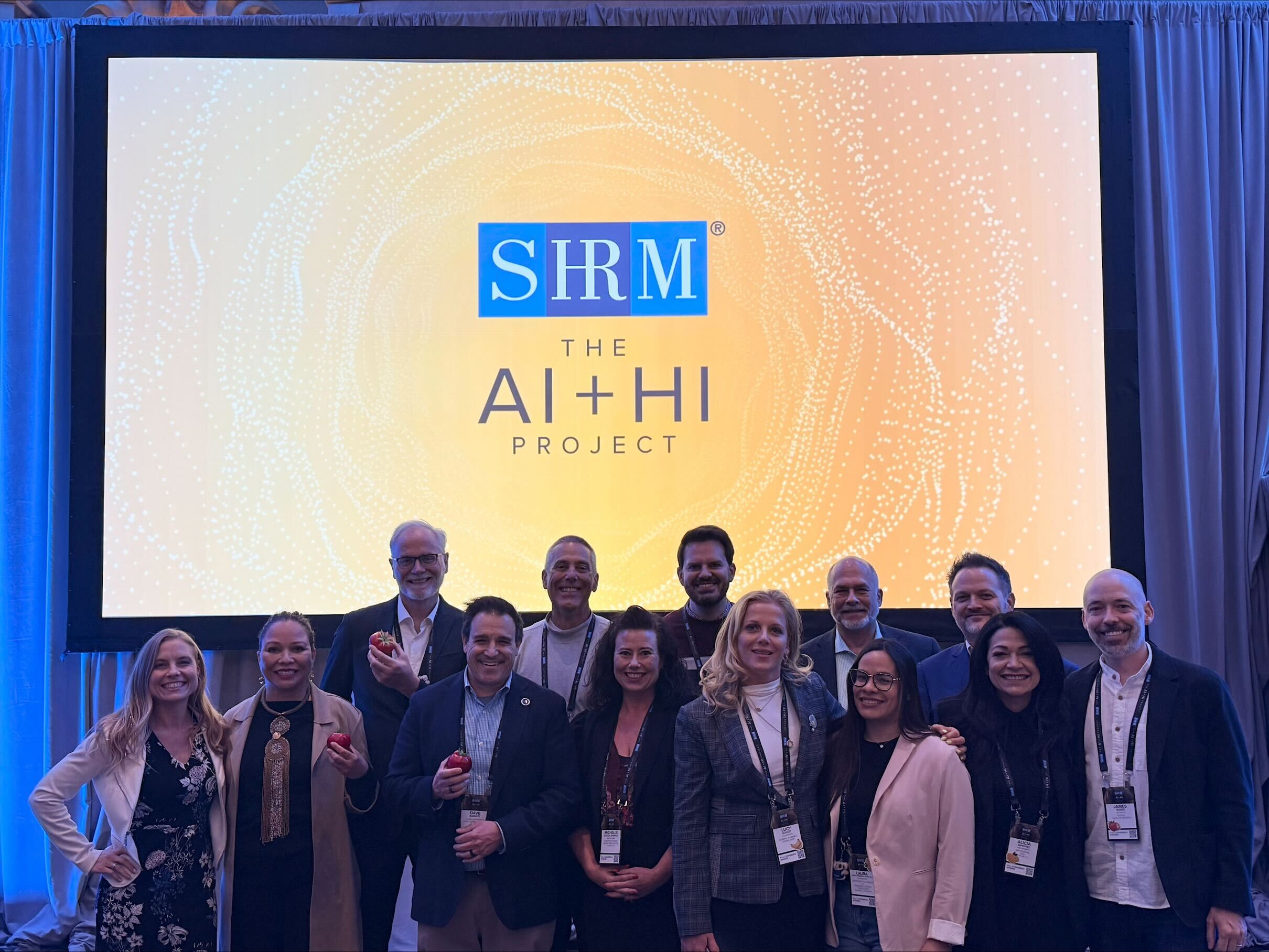
Before diving in, a little about our GA guest blogger, Lucy Schott (in her words)

With over a decade of experience leading HR transformation at Fortune 500 companies across APAC, EMEA, and the Americas, I’ve seen firsthand what happens when organizations try to adopt new technology and change without bringing their people along for the ride.
Today, I’m the founder of Unlocked Consultancy, where I help companies close the gap between AI ambition and workforce readiness. I also work as a Consultant with General Assembly, advising, designing, and delivering enterprise AI training programs that meet people where they are.
Most recently, I had the privilege of speaking and facilitating innovation labs at SHRM’s AI+HI Project 2026 conference in San Francisco—the experience that inspired this article.
I’m passionate about making AI adoption feel less overwhelming and more human. Let’s connect on LinkedIn to talk about workforce transformation, AI readiness, or anything in between. Don’t hesitate to reach out and say hello.
Earlier this week, I joined more than 500 HR and talent leaders at SHRM’s AI+HI project conference at the beautiful Fairmont Hotel in San Francisco.
With a pinnacle of esteemed speakers across the tech and people space, including founders of Amazon’s “Alexa,” Apple’s “Siri,” Silicon Valley experts, and HR executives of all kinds, the key theme between lectures, innovation labs, and hallway conversations wasn’t the technology itself. It was the gap between AI and what leaders and organizations are ready for.
The evidence is clear: SHRM’s 2025 Talent Trends research found that AI adoption in HR nearly doubled in a single year from 26% to 43%, yet two-thirds of HR professionals say their organization hasn’t been proactive in preparing employees to work alongside AI. Adoption is outpacing readiness.
Here are the top three key takeaways I learned from my time at the conference:
Takeaway 1: Don’t worry, most organizations are still getting started
Most organizations are still in their infancy with using AI. Many already have GenAI tools like CoPilot, ChatGPT, and Gemini available, but the challenge is around use. According to SHRM, only 11% have embedded AI in daily workflows.
This was clear across the conference. Sessions like AI in HR: What’s Real, What’s Stalled, and What Comes Next and AI ROI – From Pilot to Scale, in which HR leaders reported lots of experimentation but little scaled implementation.
The TL;DR: Most teams are still only using AI only for basic, simple tasks without a plan, process, or structure. That’s the next (critical) step.
Takeaway 2: The silo era is over—AI adoption requires innovation and collaboration—and that all leaders model this top-down
During the innovation labs, participants were split by function and asked to build their own imaginary AI for HR products. During this exercise, the biggest themes that emerged were about breaking down silos, increasing collaboration, and creating positive work culture.
The reality is, leadership resistance and lack of trust are more common than ever, with our recent survey research reporting 37% of smaller companies experiencing this, along with 24% of larger companies.
The TL;DR: AI adoption requires more than fancy AI technology. It requires an all-in team effort between governance, change management, and human readiness.
Takeaway 3: Training ≠ transformation
One of the standout moments for me as a speaker and facilitator of the innovation labs was how so many HR leaders resisted using GenAI tools for creative activities despite being given prompts and suggestions. Because the power isn’t in the tool, but in how we’re taught to use it.
The numbers tell the same story.
Our State of Tech Talent 2026 report, surveying 500 HR leaders across the US, UK, and Singapore, found that 83% of leaders say upskilling existing employees matters more than hiring new talent.
BCG’s January 2026 research confirms the pattern—that companies realizing the most value from AI have the most ambitious upskilling programs.
As Adam Cheyer and Vishal Sharma said to the HR audience in the closing session: AI needs you.
The reality is, AI isn’t an ordinary technology training “program”—it’s a full-scale culture and change adoption process that requires upskilling and a huge focus on interactive and relatable talent development. The hardest skills to find aren’t technical, they’re human—including problem solving, communication, and teamwork.
The TL;DR: Organizations that win with AI will invest in their people with the same intensity they invest in their tools.
Looking to turn AI investment into measurable workforce impact? Check out our AI Academy and Team Training solutions.