Our Director of Program Operations on solving puzzles, overqualified rubber duckies, and making more room to be human in the age of AI
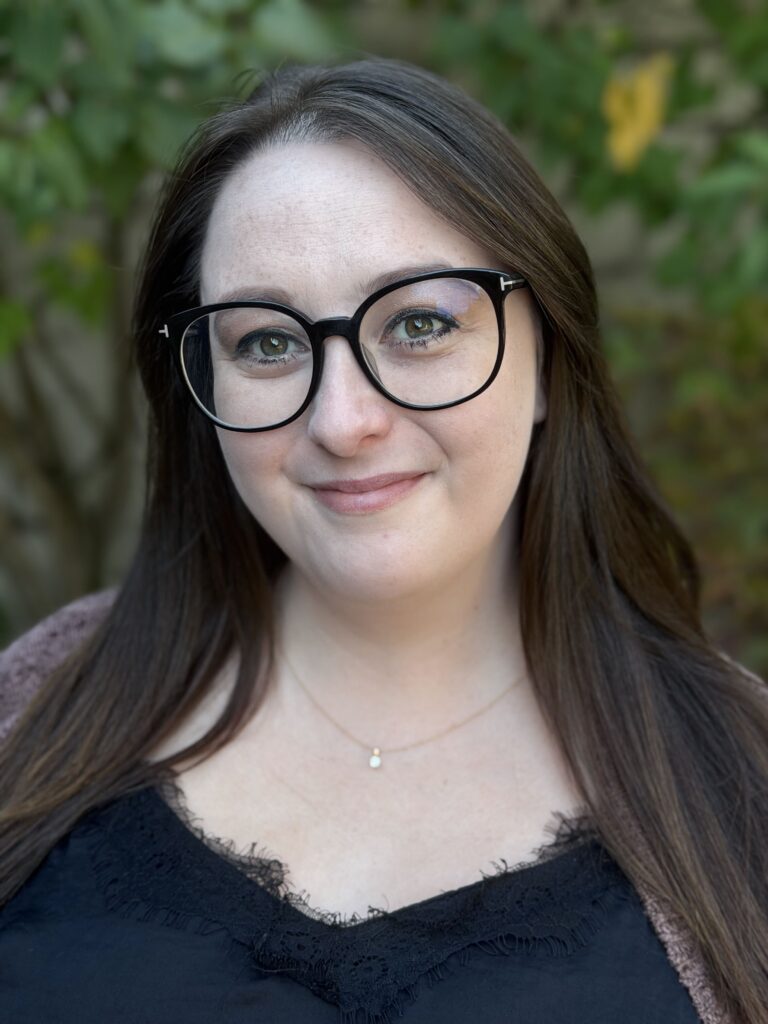
When Mads Edmiston couldn’t remember what she wanted to be when she grew up, she called her mom, who had an answer ready: “You wanted to be married and a mom.”
Her response: “… huh.”
Looking back, Mads thinks that was probably less of a career aspiration and more what “being a grown-up” looked like to her at the time. Her ambitions eventually expanded, though perhaps not with much more specificity. When her sister announced plans to become a travel writer and live on a beach somewhere, Mads decided she would become some sort of “boss” and make enough money to support them both.
What kind of boss remained unclear, but there were signs she might be onto something. Her elementary school teachers once thought she couldn’t tie her shoes because her friends always did it for her.
“I knew how to tie my shoes,” she says. “I just didn’t want to.”
Nine years into her career at General Assembly, Mads is now Director of Program Operations. And while her sister’s beach lifestyle isn’t on the payroll, that early instinct to figure out how things work, how people fit into them, and how everything could work a little better has stuck around.
Figuring out how the pieces fit
Mads likes puzzles, but not the 1,000-piece-on-the-dining-room-table kind. She’s more interested in pathways, patterns, and figuring out how things connect, which turns out to be a pretty good description of how her brain works on the job, too.
She likes understanding how people and processes fit together, where something is getting stuck, and what might happen if you try a different approach. That also means being willing to experiment and accepting that sometimes the answer will simply be: well, that didn’t work. Now we know.
For Mads, the goal isn’t to build something that stays exactly as she left it. The most rewarding part for her is creating a foundation and watching someone else take it somewhere she never would have on her own.
“Maybe I built something in a Google Sheet and someone else turns it into an app or a program or something I never would’ve thought to build myself,” she says. “That’s not someone undoing my work. That’s the work working.”
And behind all those systems, processes, and experiments are the people they’re meant to support.
“The job itself is what you make it,” Mads says. “The people are the magic.”
The world’s most overqualified rubber ducky
That puzzle-solving brain also explains a lot about how Mads uses AI. She calls it her “very overqualified rubber ducky.”
During her earlier days working on a GA campus, Mads occasionally sat in on software engineering lessons, where she learned about rubber duck debugging: the practice of explaining a problem out loud to an inanimate rubber duck until you figure out where you’re stuck.
Turns out, she’s very much a rubber duck person.
“Sometimes I don’t need someone—or AI—to give me the answer,” she says. “I just need somewhere to dump the 700 words currently bouncing around my brain while an idea is still half-baked or I’m trying to work through a problem.”
AI gives her somewhere to work through those thoughts, ask questions, poke holes in an idea, and troubleshoot without digging through several thousand pages of documentation to find one setting. It also serves another critical workplace function that most of us can probably relate to: preventing the occasional frustrated email from escaping into the wild.
“Sometimes I need my AI intern/rubber ducky to remind me that this is, in fact, not a hill I’m willing to die on,” she says. Instead, she can get the “Per my last email…” version out of her system and use AI to help figure out what actually needs to be said.
Outside of work, Mads follows much the same approach, using AI to chase whatever rabbit hole has captured her attention that day. That might mean planning meals or trips, researching a purchase, brainstorming a creative project, or calculating exactly when she’ll finish an audiobook based on her “increasingly unhinged playback speed.”
But all that AI use has also made her more conscious of what she gets back. Knowing AI can be confidently wrong, Mads regularly asks for sources, checks where information came from, and relies on her own judgment rather than taking an answer at face value.
“Honestly, AI has probably made me more discerning about the information I consume because I know I can’t just take the answer at face value.”
More room to be human
Ask Mads what AI will never be able to replace, and her answer comes quickly: human connection and art.
She sees plenty of room for AI to help people brainstorm, learn, troubleshoot, organize their thoughts, and clear some of the tedious work from their plates. What she doesn’t want is for helping humans to create something to become a reason to remove the human altogether.
“A book exists because someone had a story rattling around in their brain that they needed to get out,” she says. “A song can absolutely wreck you because another person somehow found the words for a feeling you couldn’t explain yourself.”
For Mads, that person on the other side is what gives the thing meaning. The same goes for connection.
AI might be able to simulate empathy, but it doesn’t know what it feels like to laugh with your friends until you can’t breathe or sit beside someone on a terrible day and understand that they don’t need you to fix anything.
“I want AI to take some of the other stuff off our plates so we have more time to make art, build communities, be weird, make each other laugh, and create things simply because we wanted them to exist,” she says.
“AI should give us more capacity to be human, not convince us that humans are unnecessary.”
It’s a philosophy that sounds a lot like the way Mads approaches her work: build useful things. Make them better. Give people enough support to do something with them. And then leave room for the humans involved to make them their own.
When asked what advice she’d give her younger self…
Mads keeps it simple: “Care less.”
Not don’t care. That would be a tough sell for someone who readily admits she cares quite a lot. But care less about what you’re “supposed” to be doing, whether everyone else seems to be doing life better, and whether you’re hitting the milestones at the “right time.”
It brings us back to the little girl who thought growing up meant becoming a wife and mom. There was nothing wrong with that version of adulthood. It just wasn’t ultimately hers. As Mads puts it, “That’s a version of a life. It’s not the version.”
There were paths she couldn’t see yet, things she thought she would want that became less important, and plenty of things that make her life full now that never would have made it onto her childhood checklist.
These days, Mads is less concerned with following the path she’s “supposed” to take and more interested in following the one that feels like hers, even when it’s a little weird.
“Do the weird thing. Like the thing you like even if nobody else gets it,” she says. And if you need some company along the way, her invitation stands: Come be weird. We’ll figure it out.